



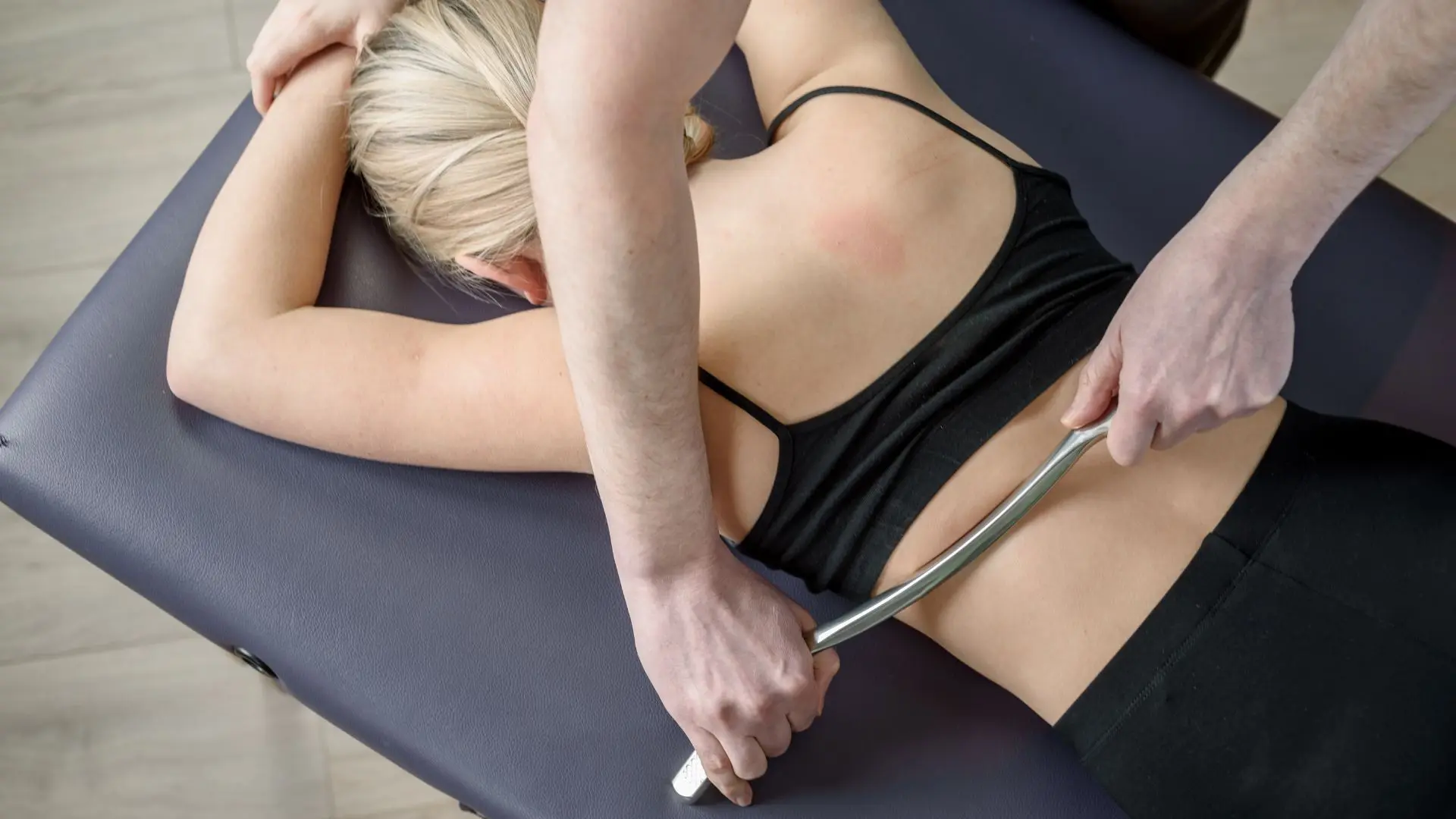
IASTM therapy is a hands-on soft tissue treatment that uses smooth, specially designed tools to apply controlled pressure to muscles, tendons, and fascia. It may help reduce pain, improve mobility, and support recovery when combined with assessment, exercise, and an individualized rehabilitation plan.
This method is not aggressive scraping, and heavy bruising is not the goal. I use it as part of rehabilitation rather than as a stand-alone cure.
What Is IASTM?
IASTM uses contoured metal or hard-plastic tools that glide over the skin to apply controlled pressure to selected muscles, fascia, tendons, and areas around fully healed scars.
The tools may help me identify tenderness, sensitivity, or movement restrictions, but they cannot diagnose an injury. I first review symptoms, medical history, strength, mobility, and daily activities before deciding whether this approach is appropriate.
At Core Chiropractic Center and Rehab, I use IASTM within a complete recovery plan. I assess movement and symptom triggers before adding mobility or strengthening exercises that relate to the patient’s work, sport, or daily routine.
Patients who want to understand this service can explore soft tissue treatment and IASTM care in Southfield, MI.
Quick takeaway: IASTM is a targeted soft tissue treatment that works best with assessment, exercise, and active rehabilitation.
What Does IASTM Mean?
IASTM means Instrument-Assisted Soft Tissue Mobilization.
“Instrument-assisted” means that I use a specialized tool. “Soft tissue” refers to muscles, fascia, tendons, and related connective tissues. “Mobilization” means applying controlled movement or pressure to a selected area.
IASTM is a broad treatment category. The Graston Technique is one branded form, but not every provider uses that system.
In simple terms: The IASTM meaning is using a specialized instrument to perform focused soft tissue mobilization.
What Is Soft Tissue Mobilization?
Soft tissue mobilization is a focused manual technique in which a trained provider uses hands, tools, or both to work on muscles, fascia, tendons, and connective tissues.
Unlike relaxation massage, soft tissue treatment focuses on a painful, stiff, or restricted area. For example, I may address calf tightness that affects ankle movement, forearm discomfort caused by repetitive gripping, or shoulder tension related to long hours at a desk.
In rehabilitation, I often combine soft tissue mobilization with stretching, strengthening, and movement retraining. This helps patients use improved movement during walking, lifting, reaching, exercising, or sitting for long periods.
What to remember: IASTM is one form of soft tissue mobilization performed with specialized tools.
What Is IASTM in Physical Therapy?
IASTM in physical therapy is an additional technique used alongside movement assessment, mobility exercises, strengthening, and functional training.
When a patient asks, “What is IASTM in physical therapy?” I explain that the tool-based treatment may prepare a sensitive or restricted area for active movement. The patient then needs exercises that match work, sport, or everyday activities.
Depending on the evaluation, I may combine IASTM with physiotherapy in Southfield, MI.
Quick takeaway: IASTM supports physical therapy but does not replace exercise, strength training, or activity changes.
What Are the Benefits of IASTM?
IASTM therapy may help reduce pain sensitivity, improve short-term mobility, and make exercise more comfortable for some patients. Results vary according to the condition, symptom duration, treatment technique, and rehabilitation plan.
Potential benefits include:
- Reduced temporary stiffness
- Improved range of motion
- Easier participation in exercise
- Targeted treatment of selected muscles and tendons
- Better movement around fully healed scars
- Improved tolerance for work, sports, or daily activity
Research is still developing. A PubMed systematic review reported possible pain and function benefits, while a 2024 meta-analysis noted possible mobility improvements with variable evidence quality.
This treatment cannot guarantee permanent relief, complete removal of scar tissue, or faster healing for every patient. I use it as one tool within a broader recovery plan.
In brief: IASTM may support pain management and mobility, but it is not a guaranteed cure.
Which Conditions May Benefit From IASTM Treatment?
Clinicians may use IASTM treatment for selected tendon, muscle, fascia, and movement-related problems.
Common examples include:
- Tennis elbow
- Achilles tendon discomfort
- Patellar tendon pain
- Calf or hamstring tightness
- Shoulder and upper-back tension
- Repetitive-strain problems
- Sports-related overuse
- Restricted movement around healed scars
IASTM may also support a plantar fasciitis plan, but heel pain can involve calf strength, foot loading, footwear, walking volume, and work demands. Patients can learn more about plantar fasciitis treatment and shockwave therapy.
Athletes may receive IASTM alongside strength, mobility, balance, and gradual return-to-activity exercises through sports injury rehabilitation in Southfield.
Quick takeaway: IASTM may support selected tendon problems, muscle tightness, sports injuries, plantar fasciitis, and healed scar restrictions.
How Is IASTM Massage Different From Regular Massage?
IASTM massage is a common phrase people use when searching for tool-assisted soft tissue care. However, IASTM and regular massage do not always have the same purpose.
Traditional massage often focuses on relaxation, stress relief, and general muscle tension. IASTM usually targets a specific muscle, tendon, fascia, or movement restriction as part of rehabilitation.
|
What to remember: IASTM massage targets a rehabilitation problem, while regular massage often focuses on relaxation.
What Should You Expect During an IASTM Session?
A session begins with an assessment. I ask about symptoms, examine posture and movement, and identify which activities increase pain or stiffness.
I also explain what the patient may feel during treatment and how I will measure progress. This helps set realistic expectations and gives the patient a clear reason for each part of the visit. I compare movement before and after care rather than relying only on temporary changes in tissue sensation.
If IASTM is appropriate, I may apply lotion and move the instrument along selected muscle or tendon lines with light-to-moderate pressure. The patient may feel firm pressure, rubbing, scraping, or temporary sensitivity. Mild redness can occur, but heavy bruising is not the goal.
After treatment, I reassess the limited movement and guide the patient through exercises so the area can use the available range during walking, reaching, lifting, squatting, or running.
Real-World Example: From Desk Pain to Better Movement
I may assess the posture, movement, strength, and workstation habits of an office professional in Southfield or the Metro Detroit area, then combine IASTM with mobility drills, resistance exercises, and workstation changes.
Quick takeaway: A complete session includes assessment, controlled treatment, reassessment, and personalized exercise.
How Should You Prepare for and Recover After IASTM Treatment?
Before treatment, share your medical history, medications, recent surgery, fractures, infections, circulation problems, and bruising concerns. Explain which movements trigger symptoms, wear clothing that allows access to the area, and avoid aggressive self-scraping.
After treatment:
- Complete the prescribed exercises.
- Avoid sudden increases in training or repetitive activity.
- Keep the area moving gently within the recommended range.
- Monitor redness, tenderness, swelling, or bruising.
- Track whether walking, reaching, lifting, sitting, or exercising feels easier.
In brief: Share your health history before treatment and follow the exercise and activity plan afterward.
What Are the Common Mistakes and Misconceptions?
A common misunderstanding is that stronger pressure and more bruising create better results. Controlled and tolerable pressure is usually more appropriate. The purpose is to support movement, not create severe soreness.
Avoid:
- Aggressive home scraping
- Expecting instant results
- Treating every painful area the same way
- Ignoring prescribed exercises
- Assuming all pain comes from tight muscles or scar tissue
- Continuing the same activity pattern that repeatedly causes irritation
Quick takeaway: More pressure does not mean better treatment. IASTM works best within a complete recovery plan.
Is IASTM Safe?
IASTM is generally considered low risk when a trained professional screens the patient, selects the correct area, uses appropriate pressure, and monitors the response.
Treatment may need to be avoided, delayed, or modified over:
- Open wounds
- Active infections
- Unhealed incisions
- Recent fractures
- Suspected blood clots
- Fragile skin
- Severe circulation problems
- Areas with reduced sensation
Extra caution may be required for people taking blood-thinning medication.
A 2025 international expert consensus notes that safety depends on the patient, condition, treatment area, healing stage, pressure, and duration.
What to remember: IASTM is generally low risk when performed appropriately, but proper screening is essential.
What Are the Most Common Questions About IASTM Therapy?
1. Is this treatment safe?
Yes, it is generally considered safe when a trained professional performs it after screening. The provider should review your health history, medications, skin condition, circulation, and treatment area.
2. Will the session be painful?
You may feel firm pressure or mild discomfort, but it should remain tolerable. The provider should reduce pressure if you feel sharp pain.
3. How many visits will I need?
The number depends on the condition, activity level, goals, and response to care. Your provider should reassess progress instead of promising a fixed number.
4. Can it help sports or gym injuries?
It may support rehabilitation for selected muscle and tendon problems. It works best with strengthening, mobility work, and a gradual return to activity.
5. Do I need to rest after treatment?
Most people can continue normal activity but should avoid sudden increases in loading. Follow the plan provided for your condition.
6. How is it different from regular massage?
IASTM targets a specific movement or tissue problem, while massage often focuses on relaxation and general tension.
7. Who should avoid it?
People with open wounds, infections, unhealed fractures, bleeding risks, or serious circulation problems may need to avoid or delay treatment.
8. Do I need to do the exercises too?
Yes. Exercise helps your body use the available movement during work, sport, and daily activity.
FAQ takeaway: IASTM may support recovery, but it requires screening, realistic expectations, and active rehabilitation.
When Should You Book an IASTM Evaluation?
Consider an evaluation when recurring muscle tightness, tendon discomfort, or restricted movement affects work, exercise, or daily life.
At Core Chiropractic Center and Rehab, I assess symptoms, posture, movement, and activity demands before deciding whether IASTM therapy is appropriate. When needed, I combine it with physiotherapy, mobility exercises, strengthening, posture education, and other rehabilitation services.
To discuss your symptoms, book an appointment with Core Chiropractic Center and Rehab.
Core Chiropractic Center and Rehab
17070 W 12 Mile Rd, Suite B
Southfield, MI 48076
Phone: 248-327-6931
Final takeaway: This treatment may help selected patients reduce discomfort, improve mobility, and participate more comfortably in rehabilitation.
This article provides general educational information and does not replace an individual medical evaluation, diagnosis, or treatment recommendation.