




Heel pain from plantar fasciitis can make every step feel frustrating. For people who have already tried rest, stretching, ice, or insoles, shockwave therapy may offer a non-surgical option that can reduce pain and support healing over time.
Quick Answer: Plantar fasciitis treatment shockwave therapy is a non-invasive treatment that uses sound-based pressure waves to target heel pain, support tissue healing, improve local blood flow, and help reduce long-standing irritation in the plantar fascia.
Core Chiropractic Center and Rehab in Southfield, MI provides chiropractic and rehabilitation care for patients dealing with heel pain, plantar fasciitis, back pain, neck pain, sports injuries, and injury-related conditions.
What Is Shockwave Therapy for Plantar Fasciitis?
Plantar fasciitis is a common cause of heel pain, especially in people who spend long hours standing, walking, or working on hard surfaces. It happens when the thick band of tissue along the bottom of the foot, called the plantar fascia, becomes irritated from repeated strain.
Many people notice sharp pain with their first steps in the morning, soreness after long periods of standing, or discomfort that returns again and again even after home care.
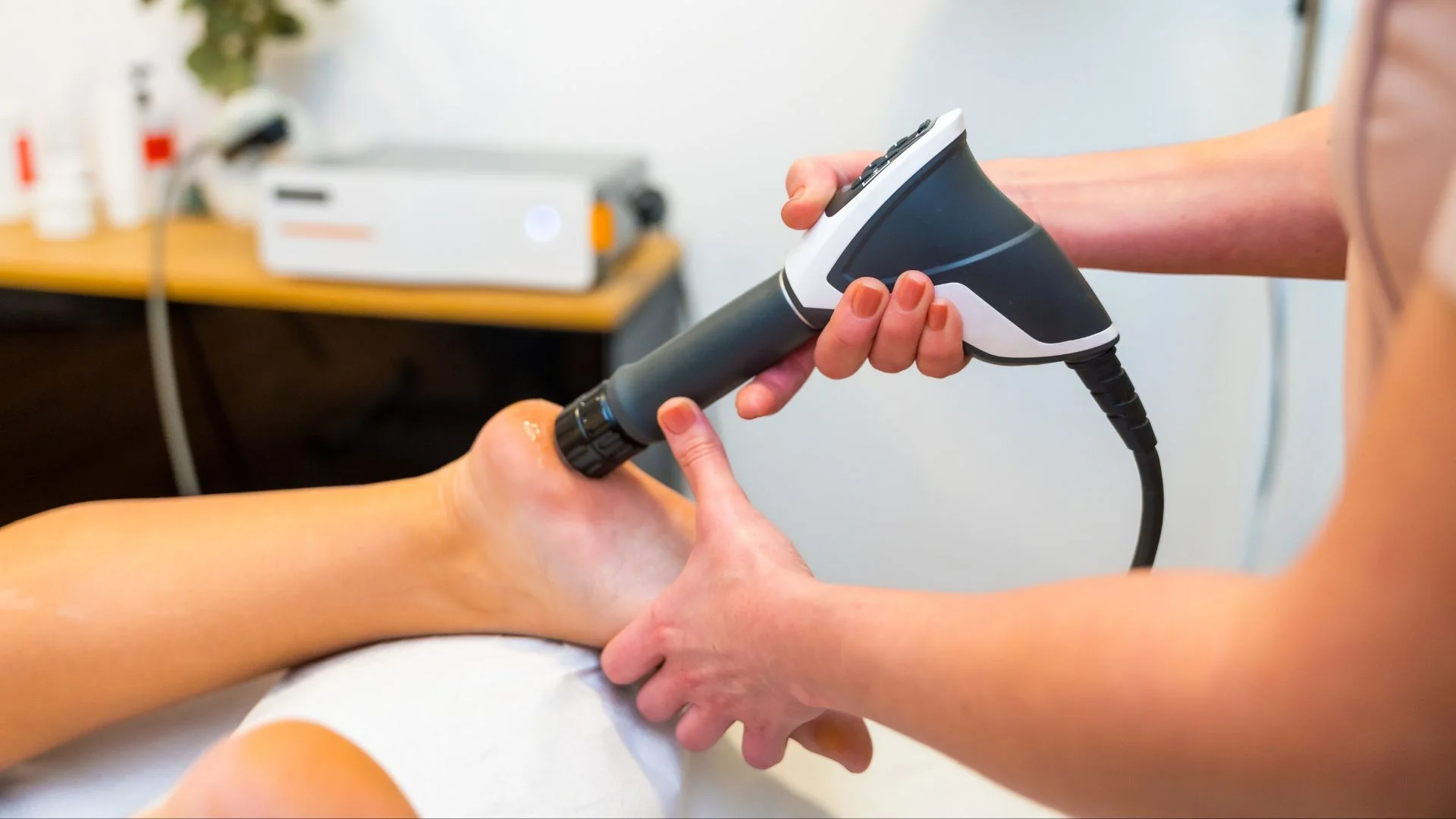
Plantar fasciitis treatment shockwave therapy is a non-invasive treatment that uses sound-based pressure waves to target the painful area in the heel. The goal is to stimulate the body’s natural repair response, improve local blood flow, and help calm long-standing irritation in the tissue.
It is often considered when symptoms have lasted for months and more basic care has not brought enough relief. For many patients, it feels appealing because it does not involve injections, large incisions, or a long recovery period.
How Shockwave Therapy Helps Heel Pain
The idea behind shockwave therapy is simple: controlled pulses are delivered to the sore part of the foot to encourage healing in tissue that has been slow to recover.
While the treatment is not magic and does not fix every case overnight, it may help restart a healing response in stubborn plantar fascia pain.
Possible shockwave therapy benefits may include:
Reduced heel pain during walking.
Less sharp pain during the first steps of the morning.
Better tolerance for standing through work or daily routines.
Improved foot function over time.
A chance to avoid more invasive procedures.
Many patients seek this option after trying stretching, supportive footwear, orthotics, activity changes, or ice without lasting improvement. In those situations, plantar fasciitis treatment shockwave therapy may become part of a broader recovery plan rather than a stand-alone fix.
Radial vs Focused Shockwave Therapy for Plantar Fasciitis
There are different ways this treatment may be delivered. In some clinics, radial shockwave therapy is used to spread energy over a broader area, while other cases may be better suited for focused shockwave therapy when a more precise target is needed.
| Type of Shockwave Therapy | How It Works | Best Used For |
|---|---|---|
| Radial shockwave therapy | Spreads pressure waves over a broader treatment area | Wider heel or foot pain areas |
| Focused shockwave therapy | Sends energy more precisely to a specific point | A more targeted painful area |
The right option depends on the patient’s symptoms, pain location, medical history, and provider evaluation.
For a broader explanation of radial shockwave therapy, you can also read:
What Treatment Feels Like
A typical session is usually short and done in the clinic. The provider first checks the painful area and identifies where symptoms are strongest. A gel is placed on the skin, and the handheld device is moved over the heel to deliver a series of pulses.
Most people describe the feeling as unusual rather than unbearable. It can be mildly uncomfortable, especially over a very tender spot, but the intensity can often be adjusted based on tolerance.
One of the most common questions is whether the treatment itself is painful. The honest answer is that it can feel intense for a few minutes, but many people are able to complete the session without any major difficulty.
The exact number of visits varies, but many treatment plans include a small series of sessions spaced over several weeks. Your provider may also recommend stretches, calf mobility work, shoe changes, or temporary activity modification between visits.
Recovery After Shockwave Therapy for Plantar Fasciitis
Recovery after a session is usually simple. Most people can get up and walk right away, although the heel may feel sore or sensitive for a short time. High-impact activity is often limited for a day or two so the foot can settle.
Results are usually gradual, not instant. Some people start to notice improvement within a few weeks, while others need more time as the tissue responds.
That slower pattern can make some patients wonder whether treatment is working, but steady improvement is often more realistic than sudden relief.
Can Shockwave Therapy Cause Damage?
Questions about safety are common, especially: can shockwave therapy cause damage?
When it is performed by a qualified provider after a proper assessment, side effects are usually mild and temporary. These may include soreness, redness, tenderness, or slight swelling around the treated area.
In rare cases, symptoms may feel more irritated for a short period after treatment, but this does not always mean something has gone wrong.
Plantar fasciitis treatment shockwave therapy may not be right for every patient. A full evaluation matters, especially when heel pain may be linked to nerve irritation, stress injury, severe biomechanical strain, or another condition that needs a different approach.
Shockwave Therapy Cost for Plantar Fasciitis
Shockwave therapy cost can vary depending on the clinic, number of sessions, severity of symptoms, and whether the treatment is part of a broader care plan.
Some patients may need only a short series of visits, while others may need additional care such as stretching guidance, footwear advice, chiropractic care, physiotherapy, or activity modification.
Before starting treatment, patients should ask about:
Session pricing.
Number of recommended visits.
Package options.
Insurance or payment details.
Whether other therapies are included in the care plan.
Plantar Fasciitis Treatment Shockwave Therapy in Southfield, MI
Core Chiropractic Center and Rehab offers chiropractic and rehabilitation care in Southfield, MI for patients dealing with heel pain, plantar fasciitis, back pain, neck pain, sports injuries, auto accident injuries, and mobility concerns.
Patients searching for plantar fasciitis treatment shockwave therapy in Southfield, MI can schedule an evaluation to understand whether shockwave therapy, chiropractic care, physiotherapy, or another treatment approach may be suitable for their condition.
Core Chiropractic Center and Rehab is located at:
17070 W 12 Mile Rd Ste B, Southfield, MI 48076, United States
Phone: +1 248-327-6931
A Realistic Example
Imagine someone who wakes up every day with stabbing heel pain, limps through the first few minutes of walking, and feels foot fatigue again after standing for work. They try rolling the foot, stretching the calf, using better shoes, and limiting long walks, but the pain keeps returning.
After an evaluation, shockwave therapy is added to the treatment plan. The first session brings mild soreness that fades quickly. Over the next few weeks, morning pain becomes less sharp, walking feels easier, and standing for longer periods becomes more manageable.
That kind of steady progress is often what patients hope for: not a miracle in one day, but a genuine step toward normal movement again.
Common Mistakes People Make
Some people lose confidence in treatment too early because they expect instant results. Others return to high-impact exercise too soon because the heel feels slightly better after one or two visits.
Other common mistakes include:
Ignoring footwear that keeps re-irritating the foot.
Skipping home stretches between appointments.
Assuming every heel pain problem is plantar fasciitis.
Choosing treatment without a proper diagnosis.
Focusing only on pain relief and not on long-term foot support.
A better approach is to see treatment as one part of a full recovery plan. Good guidance, realistic expectations, and consistent follow-through usually matter just as much as the procedure itself.
FAQs
Does shockwave therapy work for plantar fasciitis?
It may help many people, especially when heel pain has lasted for months and basic treatments have not provided enough relief. It is usually used as a non-surgical option to reduce pain and support tissue healing.
How does shockwave therapy help plantar fasciitis?
It delivers controlled pressure waves to the painful area of the foot. This may stimulate healing, improve circulation in the area, and help reduce ongoing irritation in the plantar fascia.
How many sessions of shockwave therapy are needed for plantar fasciitis?
The number of sessions can vary based on the severity of symptoms and the treatment plan. Many people are advised to have several sessions over a few weeks rather than expecting one visit to solve the problem.
Is shockwave therapy painful for plantar fasciitis?
It can feel uncomfortable during the session, especially in very tender areas, but many people tolerate it well. The sensation is usually brief, and the intensity can often be adjusted.
Can I walk after shockwave therapy for plantar fasciitis?
Yes, most people can walk after treatment. Some soreness is possible, so it is usually smart to avoid heavy impact or overloading the foot for a short period.
What are the side effects of shockwave therapy?
The most common side effects are temporary soreness, redness, swelling, or tenderness around the treated area. Serious complications are uncommon when the treatment is performed appropriately.
Can shockwave therapy make plantar fasciitis worse?
Some people notice a short-lived increase in soreness after treatment. That does not always mean the condition is worsening, but ongoing or severe pain should always be reviewed by the provider.
How long does it take to see the benefits of shockwave therapy?
Improvement is often gradual. Some people notice early changes within a few weeks, while others need more time before walking and standing become easier.
Where can I get plantar fasciitis treatment shockwave therapy in Southfield, MI?
Patients in Southfield, MI can contact Core Chiropractic Center and Rehab to schedule an evaluation for heel pain, plantar fasciitis, and non-surgical care options such as shockwave therapy.
Resources & Further Reading
Royal Orthopaedic Hospital: Shockwave Therapy for Heel Pain
PubMed: Systematic review of ESWT for chronic plantar fasciitis
Conclusion
Plantar fasciitis treatment shockwave therapy may be a helpful non-surgical option for people dealing with ongoing heel pain that has not improved with basic home care. It may support healing, reduce discomfort, and improve walking comfort over time.
For patients in Southfield, MI, Core Chiropractic Center and Rehab provides chiropractic and rehabilitation care for heel pain, plantar fasciitis, back pain, neck pain, and injury-related conditions. A proper evaluation can help determine whether shockwave therapy is the right option for your symptoms.