




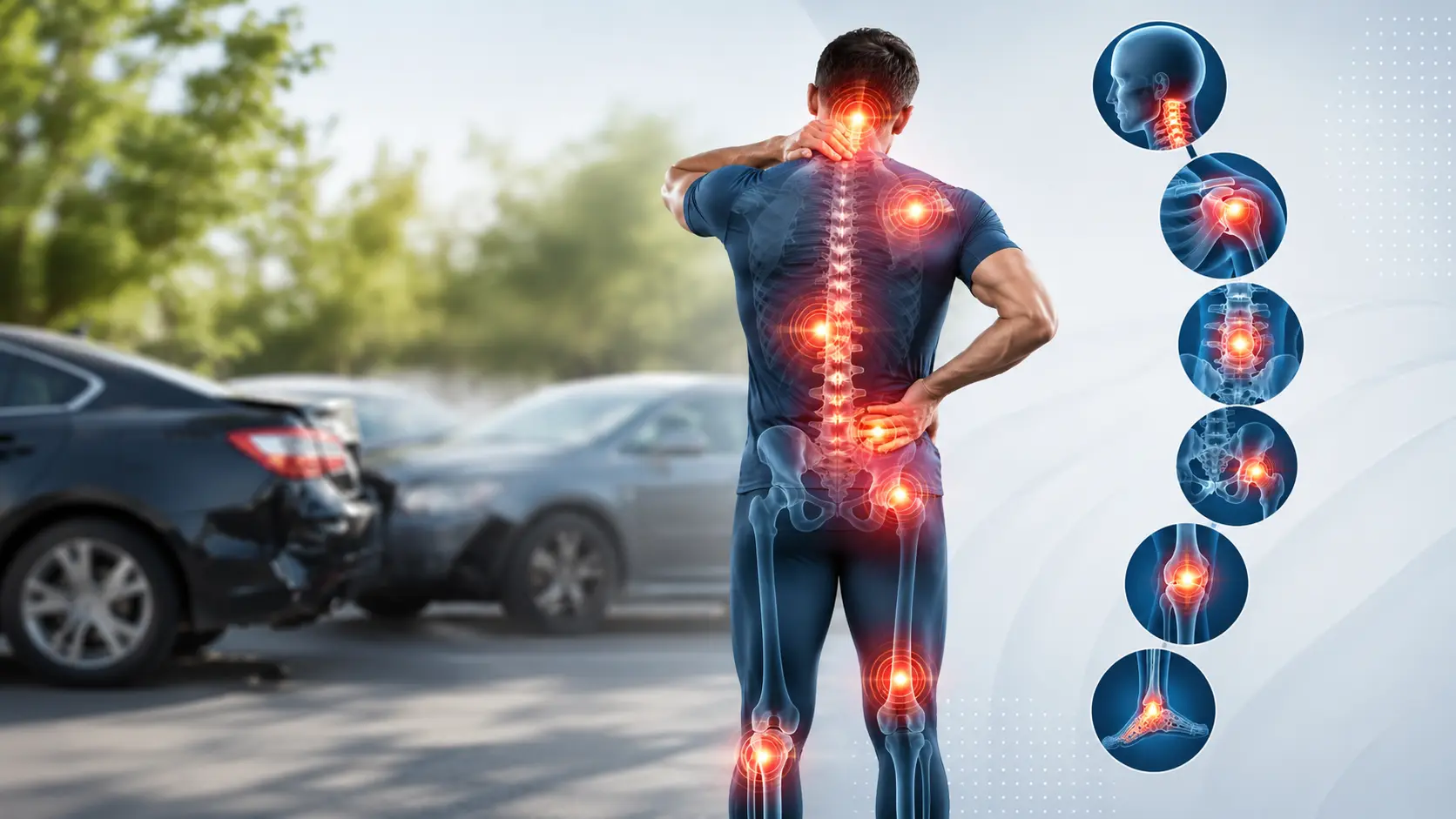
Car accident injuries can affect much more than one painful area. During a collision, your body may be pushed, twisted, compressed, or thrown forward and backward within seconds. This sudden force can affect muscles, joints, ligaments, the spine, and sometimes the head and nervous system.
Some injuries cause symptoms immediately, while others may become noticeable hours or even days later. For people experiencing car accident injuries in Southfield, MI, understanding what symptoms to watch for can help them decide when professional evaluation may be necessary.
From the head and neck to the back, hips, knees, and legs, a motor vehicle collision can affect several areas of the body at the same time.
What Are the Most Common Car Accident Injuries?
Common car accident injuries include whiplash, back injuries, soft-tissue strains and sprains, shoulder injuries, head injuries, chest injuries, hip injuries, and knee or leg injuries. Which injuries develop and how serious they become often depends on the mechanics of the crash, including the direction of impact, collision force, body position, and use of safety restraints.
Some of the most commonly affected areas include:
Head and brain
Neck
Shoulders
Upper and lower back
Chest and ribs
Hips and pelvis
Knees and legs
Muscles, ligaments, and other soft tissues
Symptoms can range from mild stiffness and soreness to significant pain, weakness, numbness, dizziness, or difficulty moving normally.
Why Can a Car Accident Injure So Many Parts of the Body?
When a vehicle changes speed or direction abruptly, different parts of the body can be exposed to force almost instantly. Although seat belts, airbags, and vehicle seats are designed to reduce injury risk, the body may still move suddenly during impact.
Different types of collisions may affect the body differently.
A rear-end crash may rapidly move the head and neck backward and forward. A side-impact collision can place additional stress on the shoulders, ribs, spine, hips, and legs. A frontal collision may create force through the chest, knees, back, and other areas.
Several factors can influence the pattern and severity of injuries from a car accident, including:
Direction of impact
Speed and force of the collision
The occupant's position at the time of impact
Seat belt use
Airbag deployment
Previous injuries or health conditions
The way the body moved during the collision
Because these factors vary from crash to crash, two people involved in similar accidents may experience very different injuries and symptoms.
1. Head and Brain Injuries
The head may be injured if it strikes a headrest, steering wheel, window, dashboard, or another surface during a collision.
Even when the head does not directly hit an object, abrupt acceleration and deceleration can cause movement inside the skull. This type of sudden motion may still contribute to a concussion or other mild traumatic brain injury.
Possible concussion symptoms include:
Headache
Dizziness
Balance problems
Nausea
Vision problems
Fatigue
Difficulty concentrating
Memory problems
Feeling mentally foggy
According to the CDC's guidance on mild traumatic brain injury and concussion, concussion symptoms can affect physical function, thinking, memory, sleep, and emotions.
Severe or worsening headache, repeated vomiting, loss of consciousness, seizures, increasing confusion, weakness, or other significant neurological symptoms after an accident require prompt medical attention.
2. Neck Injuries and Whiplash
The neck is particularly vulnerable during a collision because the head can move rapidly while the torso is restrained.
Whiplash is one of the best-known car crash injuries. The condition develops when sudden movement places abnormal stress on the neck and the tissues surrounding the cervical spine.
Common symptoms may include:
Neck pain
Neck stiffness
Reduced range of motion
Headaches
Shoulder discomfort
Upper-back pain
Tenderness around the neck
The Mayo Clinic overview of whiplash explains that whiplash is commonly associated with forceful back-and-forth movement of the neck and frequently occurs after rear-end car crashes.
Symptoms and recovery times can vary from person to person. Our guide on how long whiplash lasts after a car accident explains whiplash symptoms, recovery considerations, and when additional evaluation may be appropriate.
3. Shoulder and Upper-Back Injuries
The shoulders and upper back can experience significant stress during a collision.
Seat belts play an important role in protecting occupants, but the sudden force of a crash can still contribute to muscle strain, joint irritation, bruising, or stiffness around the shoulders and upper back.
Possible symptoms include:
Shoulder pain
Pain around the shoulder blades
Stiffness
Difficulty lifting the arm
Pain while reaching
Discomfort while sleeping on one side
Pain felt in the shoulder or arm may sometimes be connected to structures in the neck rather than the shoulder itself.
Shoulder discomfort that continues, becomes more intense, or limits normal movement after a crash should be properly evaluated.
4. Chest and Rib Injuries
The chest can absorb force from several sources during a collision, including the restraint system, airbag, steering wheel, or interior surfaces of the vehicle.
Milder injuries may cause:
Bruising
Tenderness
Muscle soreness
Rib discomfort
More serious trauma can involve rib fractures or injuries to structures inside the chest.
Significant breathing difficulty, severe chest pain, rapidly worsening symptoms, or major trauma should receive immediate medical evaluation.
5. Back and Spinal Injuries
Back pain is one of the common complaints people may experience after a collision.
Sudden acceleration, deceleration, twisting, or compression can place stress on muscles, ligaments, spinal joints, discs, and surrounding tissues.
Possible symptoms include:
Lower-back pain
Upper-back pain
Muscle spasms
Stiffness
Pain with bending or twisting
Reduced mobility
Pain extending into another area
Numbness or tingling
Some people experience pain immediately, while others notice discomfort later as stiffness and soreness become more apparent.
Patients whose primary complaint is back discomfort can learn more in our detailed guide about car accident back pain, including possible causes, symptoms, and treatment considerations.
Back pain accompanied by significant weakness, loss of bladder or bowel control, severe numbness, difficulty walking, or other serious neurological symptoms requires urgent medical attention.
6. Hip and Pelvic Injuries
The hips and pelvis can also absorb substantial force during a collision, particularly in side-impact accidents.
Possible symptoms include:
Hip pain
Pelvic discomfort
Bruising
Stiffness
Difficulty walking
Pain while standing
Pain when getting in or out of a vehicle
Muscles and other soft tissues around the hips can also become strained during sudden movement.
Difficulty bearing weight or severe pain following an accident should receive medical evaluation.
7. Knee and Leg Injuries
The knees and legs may strike the dashboard, center console, door, or another part of the vehicle during a crash.
Common symptoms may include:
Knee pain
Swelling
Bruising
Stiffness
Reduced range of motion
Pain while walking
Joint instability
Drivers may also experience ankle or foot injuries because their feet are often positioned on the pedals at the moment of impact.
Persistent swelling, inability to bear weight, instability, or significant loss of movement should be evaluated.
8. Soft-Tissue Injuries
Not every car accident injury involves a broken bone.
Muscles, tendons, ligaments, and other soft tissues may be overstretched or irritated when the body moves abruptly during impact.
Common soft-tissue injuries include strains and sprains.
Symptoms can include:
Muscle soreness
Swelling
Stiffness
Tenderness
Reduced flexibility
Weakness
Limited movement
Soft-tissue symptoms may affect the neck, shoulders, back, hips, knees, and other parts of the body.
Because these symptoms are not always immediately obvious, some people initially feel relatively normal after a crash and notice increasing discomfort later.
Can Car Accident Injuries Show Up Days Later?
Yes. Some car accident injury symptoms may become noticeable hours or days after a collision.
A person may initially focus on the stress of the accident and notice stiffness, soreness, headaches, neck pain, or back pain later.
Delayed symptoms may include:
Neck stiffness
Headaches
Back pain
Shoulder pain
Muscle soreness
Reduced range of motion
Swelling
Tingling or numbness
Delayed symptoms do not automatically mean that an injury is serious. However, new, persistent, or worsening symptoms should not be ignored simply because some time has passed since the collision.
Keeping track of when symptoms started, where they occur, and what movements make them better or worse can be useful during an evaluation.
When Should You Seek Care After a Car Accident?
Anyone experiencing potentially serious symptoms after a collision should seek appropriate emergency or medical care.
Seek urgent medical attention for symptoms such as:
Loss of consciousness
Severe or worsening headache
Repeated vomiting
Significant chest pain
Difficulty breathing
Severe weakness
Significant numbness
Difficulty walking
Loss of bladder or bowel control
Confusion
Seizures
Rapidly worsening symptoms
For non-emergency musculoskeletal symptoms such as persistent neck pain, back pain, stiffness, joint discomfort, or reduced mobility, an evaluation can help determine what structures may have been affected and what type of care may be appropriate.
Car Accident Injuries in Southfield, MI
For people experiencing car accident injuries in Southfield, MI, symptoms such as neck pain, back pain, stiffness, headaches, shoulder discomfort, or reduced mobility may continue after the immediate stress of the collision has passed.
Core Chiro Rehab serves patients in Southfield and surrounding communities who are experiencing musculoskeletal symptoms following motor vehicle accidents.
An evaluation may involve discussing how the collision happened, reviewing symptoms, examining movement and mobility, and determining whether additional medical assessment or imaging may be necessary.
Depending on the nature of the injury, a care plan may focus on mobility, musculoskeletal function, pain management, rehabilitation, and gradually returning to normal daily activities.
Patients experiencing ongoing neck pain, back pain, stiffness, or other musculoskeletal symptoms can learn more about our approach to post-accident care on our auto accident chiropractor in Southfield, MI service page.
Frequently Asked Questions About Car Accident Injuries
What are the most common car accident injuries?
Common car accident injuries include whiplash, back injuries, muscle strains, ligament sprains, shoulder injuries, head injuries, chest injuries, hip injuries, and knee or leg injuries. The type of injury depends on how the collision occurred and how the body moved during impact.
Can car accident injuries appear days later?
Yes. Symptoms such as neck stiffness, headaches, muscle soreness, back pain, shoulder discomfort, or reduced mobility may become more noticeable hours or days after a crash. New or worsening symptoms should be evaluated appropriately.
What parts of the body are commonly injured in a car accident?
Car accidents can affect the head, neck, shoulders, upper and lower back, chest, ribs, hips, pelvis, knees, legs, ankles, and soft tissues. Multiple areas may be injured during the same collision.
What are common symptoms after a car accident?
Common symptoms may include pain, stiffness, headaches, swelling, muscle soreness, reduced range of motion, tenderness, dizziness, numbness, tingling, or difficulty performing normal activities.
Is whiplash common after a car accident?
Whiplash is commonly associated with motor vehicle collisions, particularly rear-end crashes. It results from rapid movement of the neck and can cause neck pain, stiffness, headaches, and reduced range of motion.
When should I seek medical attention after a car accident?
Seek immediate medical attention for serious symptoms such as loss of consciousness, severe headache, repeated vomiting, chest pain, breathing difficulty, seizures, major weakness, loss of bladder or bowel control, or rapidly worsening neurological symptoms.
Persistent neck pain, back pain, stiffness, or reduced mobility should also be evaluated by an appropriate healthcare professional.
Can a minor car crash still cause injuries?
Yes. A crash does not have to cause major visible vehicle damage for an occupant to experience discomfort or musculoskeletal symptoms. The sudden movement generated by impact can still place stress on the neck, back, joints, muscles, and ligaments.
Where can I get evaluated for car accident injuries in Southfield, MI?
People experiencing non-emergency musculoskeletal symptoms after a collision can seek an appropriate healthcare evaluation. Core Chiro Rehab in Southfield evaluates patients experiencing accident-related neck pain, back pain, stiffness, reduced mobility, and other musculoskeletal complaints.
Final Thoughts
Car accident injuries can affect the body from head to toe. The head, neck, shoulders, spine, chest, hips, knees, legs, and soft tissues may all be affected depending on the type and force of the collision.
Some injuries become noticeable immediately, while others may cause symptoms later. Paying attention to changes in pain, movement, strength, balance, sensation, or other symptoms can help you determine when additional evaluation may be needed.
For people experiencing car crash injuries in Southfield, MI, persistent musculoskeletal symptoms should not simply be ignored. Understanding what may have been injured and receiving an appropriate evaluation can help guide the next steps in recovery.