




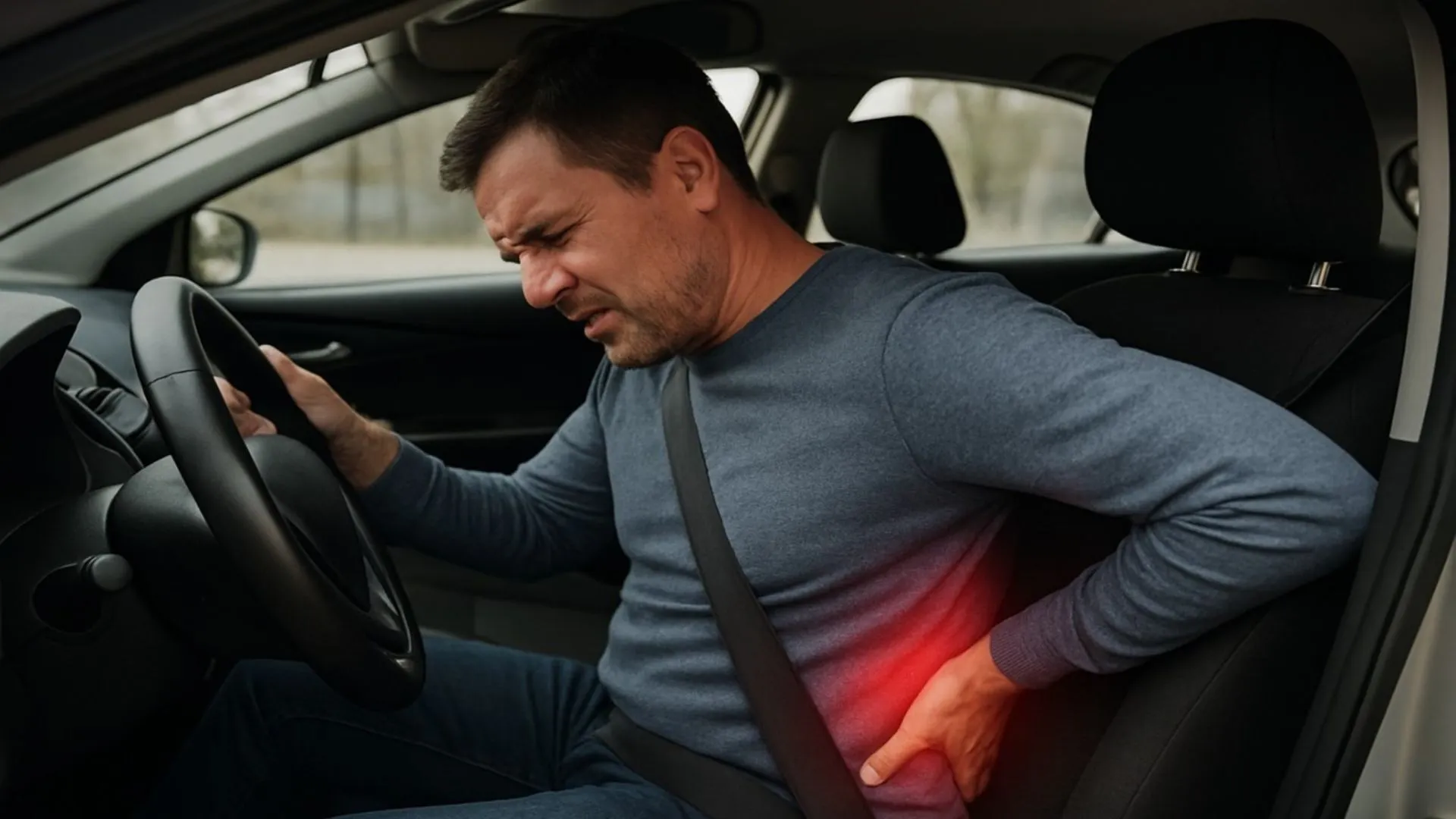
Car accident back pain is lower or upper back discomfort after a crash, often from muscle strain, ligament sprain, disc injury, or joint irritation. Most cases improve with early movement, gentle care, and professional evaluation. Seek urgent help for leg weakness, numbness, or bladder/bowel changes.
What is car accident back pain?
Car accident back pain describes any new or worsened back discomfort that starts after a motor vehicle collision. It can appear immediately or show up 24–72 hours later as inflammation builds. In our experience with Southfield auto injury patients, the most common sources are soft-tissue strains, ligament sprains, facet joint irritation, and disc-related issues.academic.
The lumbar (lower) spine takes significant force during sudden stops, rear-end impacts, or side collisions. Even “minor” fender-benders can overstretch muscles and ligaments, compress discs, or inflame small spinal joints. While many cases resolve within weeks, some evolve into chronic pain without proper care. Early evaluation helps rule out fractures, nerve compression, or disc herniation that need targeted treatment.
Common causes of back pain after auto accident
Back pain after auto accident stems from several distinct injury types. The force of a crash can strain muscles, tear ligaments, bulge discs, or irritate facet joints. In clinical practice, we see a mix of these injuries, often overlapping.
- Lumbar strain or sprain: Overstretching or micro-tears in lower back muscles and ligaments cause localized achy pain, stiffness, and muscle spasms. Pain usually stays in the back without radiating down the leg. Most people improve within 2–4 weeks with conservative care.
- Herniated or bulging disc: Impact can push disc material outward, pressing on nearby nerves. This often causes sharp, shooting pain into the buttock or leg, plus numbness, tingling, or weakness. Sitting and bending forward may worsen symptoms.
- Facet joint injury: Small joints at the back of the spine can become inflamed from whiplash-like motion. Pain is typically sharp with extension (leaning backward) and may refer to the hip or thigh but not below the knee.
- Compression fracture: High-energy impacts can crack vertebral bones, especially in older adults or those with osteoporosis. This causes severe, localized pain and requires imaging and medical management.
- SI joint dysfunction: The sacroiliac joint can become unstable or irritated from crash forces, leading to one-sided lower back/buttock pain that worsens with standing or climbing stairs.
Understanding the likely cause guides treatment choices and sets realistic recovery timelines.
Symptoms to watch for after a crash
Symptoms vary by injury type but often include a combination of pain, stiffness, and movement limitations. Some signs point to nerve involvement and need prompt evaluation.healthdirect.
- Localized ache or tenderness: Common with strains and sprains. Pain feels muscular, worsens with movement, and may improve slightly with rest.
- Stiffness and reduced range of motion: Especially noticeable in the morning or after sitting for long periods. Gentle movement usually helps.
- Muscle spasms: Tight, knotted muscles that can feel like a “locked” back. Spasms often accompany strains and disc irritation.healthdirect.
- Radiating pain, numbness, or weakness: Shooting pain down the leg, numbness in the foot, or leg weakness suggests nerve compression from a disc or severe inflammation.
- Pain worse with sitting or bending: Disc-related pain often increases with forward flexion and prolonged sitting.
- Pain worse with extension: Leaning backward aggravates facet joint injuries.
Red flags that need urgent care include loss of bladder or bowel control, progressive leg weakness, numbness in the groin/saddle area, severe unrelenting pain, or visible spinal deformity.
When to see a doctor for car crash back pain
Timing matters. In Michigan, we recommend evaluation within 14 days of a crash, especially if you plan to use auto insurance benefits. Early assessment documents injuries, rules out serious problems, and starts a recovery plan.
See a doctor promptly if:
- Pain interferes with sleep, work, or daily activities
- Stiffness limits bending, standing, or walking
- Numbness, tingling, or weakness appears in the legs or feet
- Pain radiates below the knee (possible sciatica)
- Symptoms worsen after several days instead of improving
- You have a history of osteoporosis, cancer, or steroid
Go to the ER immediately for severe trauma, loss of bladder/bowel control, progressive neurological deficits, or inability to walk.
Diagnosis: What to expect at your visit
A thorough exam focuses on your story, movement patterns, and neurological screening. Imaging is reserved for red flags or persistent symptoms.academic.
- History: Mechanism of injury (rear-end, side impact), onset of symptoms, prior back issues, and current medications.
- Physical exam: Palpation for tenderness, range-of-motion testing, orthopedic tests (e.g., straight leg raise), and neurological checks (reflexes, strength, sensation).
- Imaging: X-rays may be ordered if fracture is suspected. MRI is considered if nerve symptoms persist beyond 4–6 weeks or if red flags are present.
Most uncomplicated cases do not need immediate imaging. Conservative care is first-line unless serious pathology is suspected.academic.
Treatment options that work
Effective care combines pain control, movement restoration, and gradual loading. Most patients improve with non-surgical approaches.
Immediate self-care (first 48–72 hours)
- Relative rest: Avoid heavy lifting, twisting, or high-impact activity. Short, frequent walks prevent stiffness.
- Ice then heat: Ice 15–20 minutes every 2–3 hours for the first 48 hours to reduce inflammation. Switch to heat afterward to relax muscles.
- OTC pain relief: Acetaminophen or NSAIDs (ibuprofen, naproxen) can help, if medically safe for you. Topical creams or patches may provide additional relief.
- Gentle mobility: Light stretching and walking maintain circulation and reduce muscle guarding. Avoid bed rest beyond a day.
Professional care pathways
- Chiropractic adjustments: Target joint restrictions and muscle tension. In our Southfield clinic, patients with facet irritation or SI joint dysfunction often report faster pain relief and improved mobility when care starts early.
- Physical therapy: Focuses on core stabilization, hip mobility, and graded activity. PT is especially helpful for disc-related pain and return-to-work planning.
- Medication management: Short courses of muscle relaxants or stronger analgesics may be prescribed for severe spasms or pain, under medical supervision.
- Injections: Epidural steroid injections can reduce nerve inflammation for persistent radicular pain. Facet joint injections may help select cases.
- Surgery: Reserved for fractures, severe disc herniations with neurological deficits, or cases failing 6–12 weeks of conservative care.
Evidence guidelines support multimodal conservative care as first-line for most post-crash back pain.thecollisioncareclinic+1
How chiropractic care helps after auto injuries
Chiropractic care addresses joint restrictions, muscle tension, and movement patterns that keep pain going. For auto injuries, we combine gentle adjustments with soft-tissue work and exercise guidance.
- Spinal manipulation/mobilization: Restores motion in stiff segments (facet joints, SI joint) and reduces protective muscle spasms.
- Soft-tissue therapy: Myofascial release and trigger-point work calm irritated muscles and improve blood flow.
- Therapeutic exercise: Core activation, hip mobility drills, and nerve glides (if needed) support lasting recovery.
- Ergonomic advice: Seat positioning, lumbar support, and activity pacing reduce re-aggravation during daily tasks.
In our experience, patients who start care within the first 1–2 weeks tend to recover faster and need fewer visits overall. We coordinate with primary care and imaging centers when necessary. For tailored auto injury care, see our Auto Accident Chiropractor in Southfield, MI and Chiropractic Adjustment services.
Common mistakes that delay recovery
Avoid these pitfalls to prevent chronic pain:
- Prolonged bed rest: Beyond 24–48 hours, it increases stiffness and deconditioning.
- Ignoring nerve symptoms: Leg weakness, numbness, or radiating pain needs prompt evaluation.
- Heavy lifting too soon: Re-aggravates healing tissues and can turn a strain into a longer-term issue.
- Skipping follow-up: Without a plan, mild injuries can become persistent pain syndromes.
- Relying only on painkillers: Meds mask symptoms but don’t restore motion or strength. Combine with movement-based care.
Recovery timelines and what to expect
Most soft-tissue strains improve within 2–6 weeks. Disc-related pain may take 6–12 weeks to settle with conservative care. Facet joint irritation often responds within 2–4 weeks. Fractures require longer, medically supervised recovery.
Expect some fluctuation—good days and bad days—as tissues heal. Consistent gentle movement, proper sleep, and gradual activity progression support recovery. If pain plateaus or worsens after 4–6 weeks, re-evaluation is warranted.
FAQ: Car accident back pain
1) How long does back pain last after a car accident?
Back pain after a car accident typically lasts 2–6 weeks for muscle strains and ligament sprains, while disc-related or nerve irritation can take 6–12 weeks to improve with conservative care. Most people notice steady progress within the first month if they avoid heavy activity and follow a gentle movement plan. Seek re-evaluation if pain worsens or fails to improve after 4–6 weeks.
2) Is it normal to have lower back pain from car crash days later?
Yes, it is normal for lower back pain from car crash to appear 24–72 hours after the accident as inflammation builds and adrenaline wears off. Delayed onset does not mean the injury is minor; many strains and disc irritations show up after the initial shock subsides. Early evaluation helps document injuries and start the right care plan.
3) When should I go to the ER for back pain after a crash?
Go to the ER for back pain after a crash if you have loss of bladder or bowel control, progressive leg weakness, numbness in the groin/saddle area, severe unrelenting pain, or visible spinal deformity. These are red flags for possible spinal cord or severe nerve compression. For less severe but persistent symptoms, schedule urgent care or a chiropractic/primary visit within 14 days.
4) Can a minor fender-bender cause serious back injury?
Yes, a minor fender-bender can cause serious back injury because even low-speed impacts can overstretch muscles, tear ligaments, or bulge discs. The force transmitted through the seat and seatbelt can concentrate on the lumbar spine. Severity of pain does not always match crash speed; proper evaluation is important regardless of vehicle damage.
5) What helps lower back pain after car accident at home?
Lower back pain after car accident can be helped at home by using ice for 15–20 minutes every 2–3 hours during the first 48 hours, then switching to heat to relax muscles. Take OTC pain relievers if safe for you, avoid heavy lifting, and do short, frequent walks to prevent stiffness. Gentle stretching and proper sleep positions (pillow between knees when side-lying) also support recovery.
6) Do I need an X-ray or MRI for back pain after a crash?
You do not need an X-ray or MRI for back pain after a crash unless you have red flags like severe trauma, neurological deficits, or pain that persists beyond 4–6 weeks. Most uncomplicated strains and sprains are diagnosed clinically and treated conservatively. Imaging is reserved for suspected fractures, progressive nerve symptoms, or cases not improving with standard care.academic.
7) How soon should I start chiropractic care after a car accident?
Start chiropractic care after a car accident within the first 1–2 weeks if you have persistent pain, stiffness, or limited movement. Early care helps reduce muscle spasms, restore joint motion, and prevent chronic patterns. In Southfield, many patients begin with 2–3 visits per week for 2–3 weeks, then taper as symptoms improve.
8) Can back pain after a crash become chronic?
Yes, back pain after a crash can become chronic if injuries are ignored, activity is restricted too long, or underlying joint/disc issues are not addressed. Early movement, proper diagnosis, and a structured rehab plan reduce the risk of long-term pain. If symptoms last beyond 6–12 weeks, a re-evaluation and possibly imaging are recommended.
Resources & Further Reading
External authority links
- Healthline: Low Back Pain After Car Accident: What You Need to Know — https://www.healthline.com/health/back-pain/low-back-pain-after-car-accidenthealthline
- Cleveland Clinic via DKLAW summary: Lumbar strain/sprain recovery timelines — https://dklaw.com/the-fine-print/lower-back-pain-from-car-crash/dklaw
- Michigan Auto Law: Back Pain After a Car Accident – Causes & Next Steps — https://www.michiganautolaw.com/personal-injury-lawyer/back-pain-after-car-accident/michiganautolaw
- Advance Physical Therapy: Back Pain After a Car Accident (PT perspective) — https://www.advancephysicaltherapy.com/back-pain-after-a-car-accident/advancephysicaltherapy
- Spinal Healthcare: Red Flags for Back Pain — https://www.spinal-healthcare.com/red-flags/spinal-healthcare