




Sciatica pain can make even a simple activity like sleeping extremely difficult. Sharp, burning, or electric-like pain may travel from the lower back through the hip, buttock, and leg, making it hard to find a comfortable position or stay asleep throughout the night.
The best way to sleep with sciatica is usually on the side opposite the painful leg with a pillow between the knees, or on the back with a pillow underneath both knees. These positions may help maintain a neutral spine and reduce irritation around the affected nerve roots.
However, there is no single perfect position for everyone because the underlying cause of sciatica can influence which posture feels most comfortable.
Quick Guide to Sleeping With Sciatica
| Situation | Position to Try | Pillow Placement |
|---|---|---|
| Pain mainly affects one side | Sleep on the opposite side | Between the knees |
| You prefer sleeping on your back | Lie flat on your back | Under both knees |
| Spinal stenosis contributes to pain | Slightly elevated or gently curled | Wedge behind the upper body |
| You normally sleep on your stomach | Try transitioning to side or back sleeping | Thin pillow under the hips if needed |
According to Cleveland Clinic’s guidance on sleeping with sciatica, back sleeping, side sleeping and slightly elevated positions may provide relief depending on the cause of the symptoms and the position that feels most comfortable.
Why Is Sciatica Worse at Night?
Many people notice that their sciatica symptoms become more intense when they lie down. Several factors may contribute to this nighttime discomfort.
An unsupported sleeping position can place the spine, hips or pelvis in an awkward posture. This may increase irritation around the affected nerve roots and make pain feel more noticeable.
Muscles around the lower back and hips can also become tight after a full day of sitting, standing or physical activity. This tension may contribute to discomfort along the sciatic nerve pathway.
An unsupportive mattress or pillow may allow the hips or lower back to sink too deeply, making it harder to maintain a comfortable, neutral position. Nighttime symptoms may also feel stronger because there are fewer distractions while resting.
Best Sleeping Positions for Sciatica
The most comfortable position depends on where the pain is located and what is causing it. Try one position at a time and make small adjustments with pillows until your spine, hips and legs feel supported.
Side Sleeping With a Pillow Between the Knees
Side sleeping may reduce pressure on sensitive areas and help keep the spine in a more neutral position.
- Lie on the side that feels more comfortable.
- Bend your knees slightly rather than pulling them tightly toward your chest.
- Place a supportive pillow between your knees.
- Keep your hips stacked instead of allowing the upper hip to rotate forward.
- Use a head pillow that keeps your neck aligned with your spine.
The pillow between the knees helps keep the hips, pelvis and lower back aligned. Without knee support, the upper leg may fall forward and rotate the pelvis, potentially increasing lower-back discomfort.
Which Side Should You Sleep on With Sciatica?
If the symptoms mainly affect one leg, try sleeping on the opposite side. For example, someone with right-sided sciatica may feel more comfortable sleeping on the left side with a pillow between the knees.
This is not a strict rule. If sleeping on the opposite side increases pain, tingling or numbness, change positions. Comfort and symptom response are more important than forcing the body into one particular posture.
Sleeping in the Fetal Position
A gently curled fetal position may feel comfortable for some people, especially when spinal stenosis contributes to their symptoms. Flexing the spine slightly may create more space around narrowed areas.
- Lie on your side.
- Bring your knees slightly toward your chest.
- Place a pillow between your knees.
- Avoid curling so tightly that your neck, hips or lower back become strained.
The fetal position is not suitable for every cause of sciatica. If it increases leg pain, tingling or numbness, return to a neutral side-sleeping or back-sleeping position.
Patients with persistent disc-related nerve pain may benefit from a professional evaluation to determine whether options such as spinal decompression therapy in Southfield, MI are appropriate for their condition.
Sleeping on Your Back With Knee Support
Back sleeping can distribute body weight evenly and support spinal alignment. Placing a pillow beneath both knees may reduce the arch in the lower back and help the surrounding muscles relax.
- Lie flat on your back.
- Place one or two pillows beneath both knees.
- Use a head pillow that supports your neck without pushing your head too far forward.
- If necessary, place a small rolled towel beneath the lower back for gentle support.
Avoid placing support beneath only one knee, as this may rotate the pelvis and create uneven pressure.
Slightly Elevated or Reclined Sleeping
A slightly elevated position may provide relief when spinal stenosis is contributing to sciatica. A wedge pillow, adjustable bed or recliner can support the upper body while keeping the hips and knees slightly bent.
This position should feel comfortable and should not increase symptoms. People with other causes of sciatica may prefer a flatter position.
Sleeping Positions to Avoid With Sciatica
Stomach sleeping is generally the least supportive option because it can increase the curve in the lower back and require the neck to remain turned to one side.
If you cannot sleep in another position, place a thin pillow under your hips or lower abdomen and use a low pillow beneath your head. This may reduce some of the strain on the lower back.
However, sleeping preferences vary. In some cases, stomach sleeping may feel more comfortable. Stop using any position that causes pain to travel farther down the leg or increases weakness, numbness or tingling.
Nighttime Tips to Reduce Sciatica Pain
Sleeping position is important, but a few changes to your bedtime routine may also help reduce nighttime discomfort.
Stretch Gently Before Bed
Gentle movement may help loosen tight muscles around the hips and lower back. Avoid forceful stretching, bouncing or holding a position that increases radiating leg pain.
A personalized program of lower back physiotherapy exercises may help improve mobility, strength and movement control when exercises are selected for the individual’s condition.
Use Heat or Cold Safely
Applying gentle heat to the lower back or hip for 15 to 20 minutes before bed may help relax tight muscles. Use a cloth barrier between the heating pad and the skin, and never fall asleep while using a heating pad.
A cold pack may feel more comfortable during a recent flare-up. Wrap it in a towel and use it for short periods rather than placing it directly against the skin.
Choose a Supportive Mattress
A medium-firm mattress works well for many people with lower-back discomfort, but mattress preference is personal. The goal is to prevent the hips from sinking excessively while allowing the shoulders and pelvis to remain comfortable.
Before replacing a mattress, try adjusting the existing setup with supportive pillows or a mattress topper.
Keep the Spine Aligned
Your head, shoulders, hips and pelvis should remain comfortably aligned. A pillow that is too high or too low can affect the neck and upper spine, while poor knee support may allow the pelvis to rotate.
Avoid Prolonged Sitting Before Bed
Long periods of sitting may increase stiffness in the lower back and hips. Take short movement breaks during the evening and avoid remaining in one position for extended periods.
Can Massage Help Sciatica?
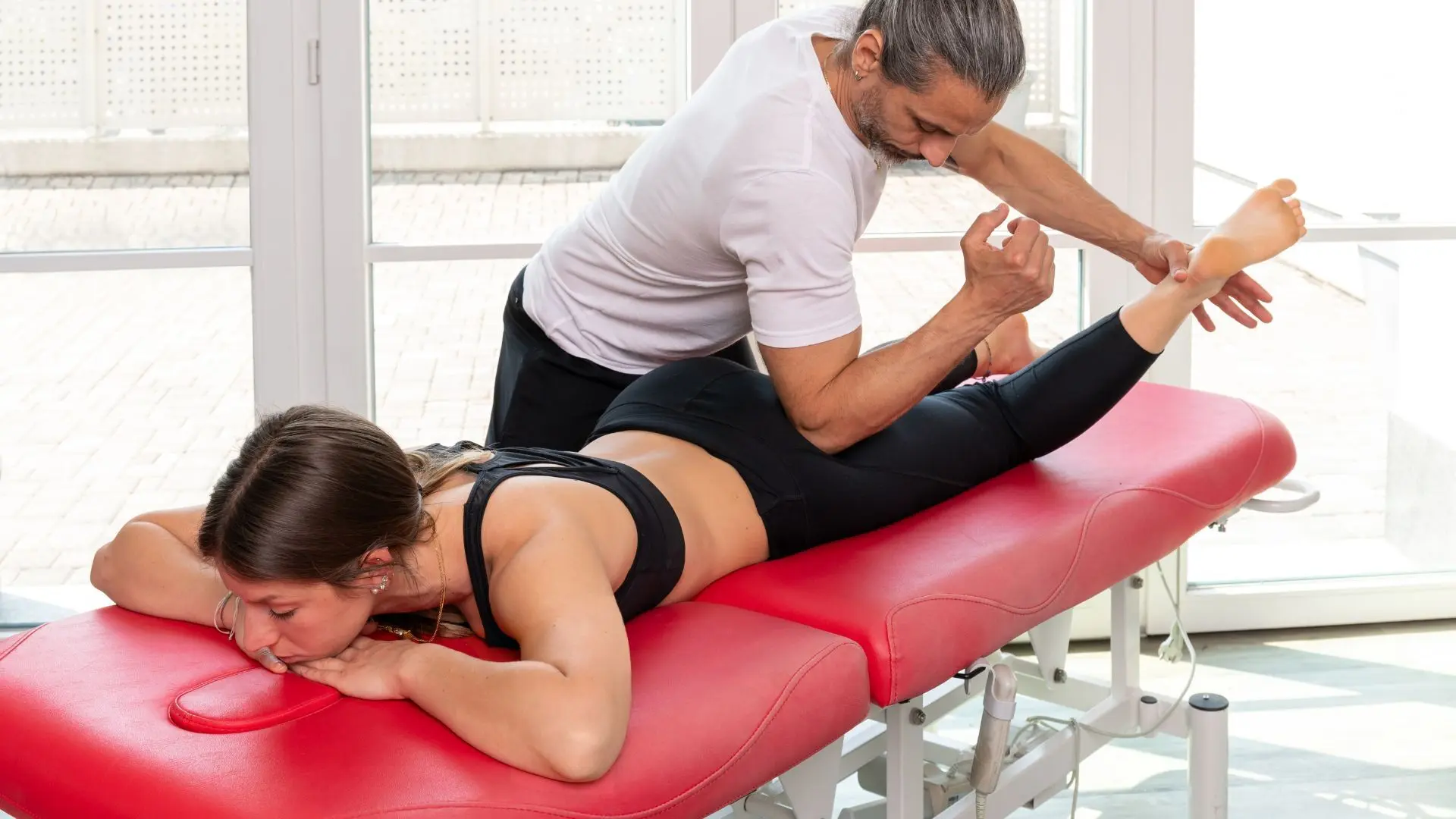
Massage may help ease muscle tension around the lower back, glutes and hips. Relaxing these surrounding muscles may temporarily improve comfort and mobility.
However, massage does not correct every underlying cause of sciatica and should not replace professional evaluation when symptoms are severe, persistent or accompanied by weakness or numbness.
Helpful Stretches for Sciatica Before Bed
The following gentle movements may help some people prepare for sleep.
Piriformis Stretch
This stretch targets a small muscle located deep in the buttock. Move slowly and stop if the stretch causes symptoms to travel farther down the leg.
Knee-to-Chest Stretch
Bringing one knee gently toward the chest may stretch the lower back and hip. Keep the opposite leg in a comfortable position and avoid pulling forcefully.
Gentle Spinal Mobility
Controlled lower-back movement may reduce stiffness before bed. Avoid deep twisting or bending if it worsens radiating pain.
Not every stretch is appropriate for every cause of sciatica. Stop if you experience increased pain, numbness, tingling or weakness.
How to Get Out of Bed With Sciatica
Getting out of bed too quickly may trigger a sudden increase in pain. A controlled log-roll technique can reduce twisting through the lower back.
- Roll onto your side while keeping your shoulders and hips together.
- Slide your legs toward the edge of the bed.
- Use your arms to push your upper body into a seated position.
- Sit briefly before standing.
- Stand using your legs while keeping your movements controlled.
Reverse these steps when getting into bed.
How Can You Support Sciatica Recovery?
Sciatica often improves gradually, but recovery depends on its cause and severity. A balanced approach may include:
- Supportive sleeping positions
- Gentle mobility and stretching
- Appropriate physical activity
- Avoiding prolonged sitting
- Professional assessment when symptoms persist
- Chiropractic care or physiotherapy when appropriate
A provider can evaluate movement, strength, sensation and possible sources of nerve irritation. Based on the findings, a personalized plan may include rehabilitation exercises, lifestyle guidance or chiropractic care in Southfield, MI.
When to See a Doctor
Mild sciatica may improve with time and conservative care. However, professional evaluation is appropriate when the pain is severe, continues to worsen, lasts longer than expected or interferes with sleep and daily activities.
The Mayo Clinic’s sciatica overview advises seeking immediate medical attention for symptoms such as sudden leg weakness, pain following a violent injury or difficulty controlling the bowels or bladder.
Seek urgent medical attention if you experience:
- New bowel or bladder control problems
- Numbness around the groin or saddle area
- Sudden or progressive leg weakness
- Severe pain following a car accident or other major injury
- Symptoms affecting both legs
- Rapidly worsening pain, numbness or difficulty walking
These symptoms may indicate significant nerve compression that requires immediate assessment.
Frequently Asked Questions
What Is the Best Way to Sleep With Sciatica?
Many people feel more comfortable sleeping on the side opposite the painful leg with a pillow between the knees. Back sleeping with a pillow beneath both knees is another supportive option. The best position depends on the cause of the symptoms and individual comfort.
Should I Sleep on the Painful Side With Sciatica?
Sleeping directly on the painful side may increase discomfort for some people. Try the opposite side first, but change positions if symptoms become worse.
Where Should I Place a Pillow When Sleeping With Sciatica?
Side sleepers can place a pillow between the knees to support the hips and pelvis. Back sleepers can place a pillow beneath both knees to reduce strain on the lower back.
Is a Firm or Soft Mattress Better for Sciatica?
A medium-firm mattress may provide a useful balance of comfort and support for many people. However, the right firmness depends on body type, sleeping position and personal comfort.
Why Does Sciatica Hurt More When Lying Down?
An unsupported sleeping position, muscle tightness, prolonged daytime sitting or pressure around an irritated nerve root may make symptoms more noticeable at night.
Can Sleeping Positions Cure Sciatica?
Sleeping positions may reduce nighttime discomfort, but they do not necessarily address the underlying cause. Persistent symptoms should be professionally evaluated.
Final Thoughts
Sciatica can make restful sleep difficult, but the right sleeping position may reduce discomfort and help the body remain supported throughout the night.
The best way to sleep with sciatica usually involves maintaining a neutral spinal position. This may mean sleeping on the side opposite the pain with a pillow between the knees, lying on the back with the knees supported or using a slightly elevated position when appropriate.
Combine supportive positioning with gentle movement, safe heat or cold therapy and appropriate daytime activity. If symptoms persist, worsen or include weakness or numbness, consult a qualified healthcare professional for an evaluation and personalized treatment plan.